
How does bTB Spread?
bTB is a respiratory infection and so primarily spreads through respiratory secretions or through inhalation of contaminated material from faeces, urine or sputum from infected animals. The main sources of infection for animals are infected cattle and badgers, and the environment contaminated by them. The infection can also spread to calves or humans by the drinking of unpasteurised milk. Mycobacteria may also infect the developing foetus.
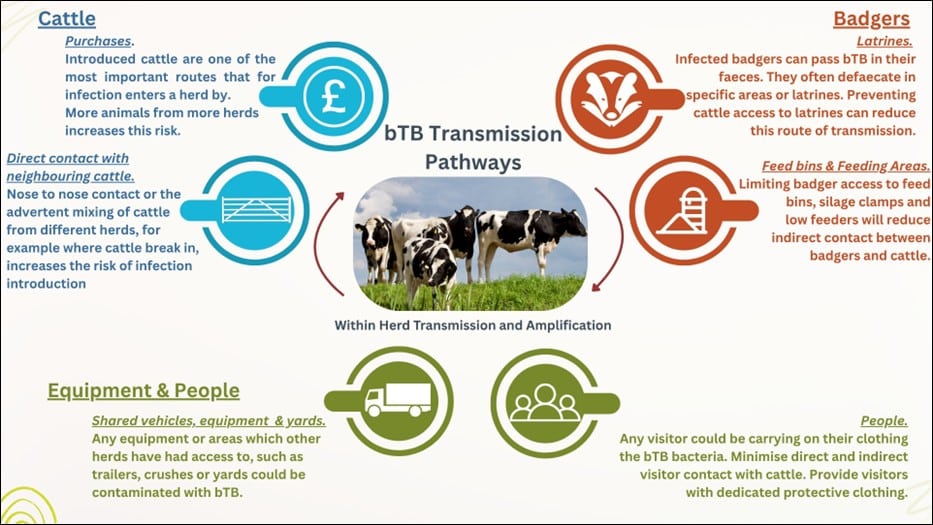
The pathway that bTB takes between animals can be thought of as a transmission chain. Importantly, bTB transmission chains can be simplified into:
- Upstream drivers of infection (i.e. where the infection enters the herd from a separate source outside the herd)
- Within herd maintenance and amplification (i.e. where the infection is already circulating in a group of animals).
The two main upstream drivers of infection within NI are:
- Cattle movements of infectious animals into farms
- Badger sources of infection.
Direct transmission of bTB occurs through close contact between animals; indirect transmission occurs through contact with contaminated material, such as sputum, urine or faeces in the environment. bTB levels are impacted by poor nutrition, poor hygiene, poor ventilation and high stocking densities.
Overall, most transmission occurs between cattle, most of which is due to within herd maintenance and infection amplification. Most herds infected with bTB have relatively few infected animals as any time point. However on occasion within herd maintenance and amplification can lead to very large numbers of infected animals within a herd. However this within herd transmission can only happen where there have been previous upstream drivers of infection introducing infection into herds. In the absence of these drivers, within herd amplification will not happen unless there is undisclosed infection within the herd. Therefore the most effective long term means of preventing infection is to limit the upstream drivers of infection.
Infected cattle
Cattle are a known maintenance host for bTB. While the NI bTB testing programme aims to detect all infected cattle, given the characteristics of the tests used, on occasion, some infected cattle can remain undetected or the speed of detection is slowed. This residual infection is an important challenges to bTB eradication. Undetected infected animals can act as sources of infection to other cattle both within and between herds. To address this all bTB testing programmes are built around repeated cycles of testing, in order to maximise the likelihood of detecting all infected cattle present. Despite this, some infected cattle do remain undetected and pose ongoing infectious threats to other cattle.
Infected wildlife
Badgers can act as bTB reservoirs of infection (maintenance hosts). There is very strong evidence that badgers are an important upstream driver of infection into cattle herds (and that infected cattle act as upstream drivers of infection into badger populations). How important badgers are in driving bTB infection will vary by landscape and farm type, but one of the factors likely to be important will be the opportunity of direct and indirect inter-species contact, for example at badger latrines or cattle feeding areas. This factor in turn will be influenced by badger and cattle densities.
Deer can also act as a reservoir of infection. Evidence from Ireland suggests that the risk from deer is likely to be localised and overall less significant than that from badgers.
Environment
Mycobacteria can survive on pasture for several months, even after infected animals have been removed. There is evidence that it can be present in water sources. The level of environmental risk will largely be driven by the level of environmental contamination.