Protecting your herd
The most important sources of bTB infection to a herd are:
- Purchase of cattle that are infected with bTB.
- Exposure to bTB in the environment.
- Direct contact with infectious cattle.
Purchase of infected cattle.
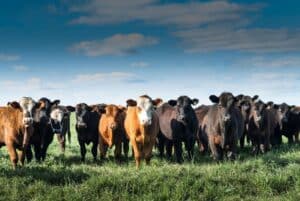
The current tests for bTB mean that some infected cattle do not get identified quickly and some may remain in herds even after they have gone through a number of test cycles. This means that there is always a risk of purchasing cattle that may be infected. This risk increases with the number of cattle purchased and with the number of herds purchased from.
The longer a vendor herd has been free from detected infection, the more likely that herd is of truly being free of infection.
Therefore three measures that reduce this risk are:
- Wherever possible minimise the number of purchases you make into your herd.
- Minimise the number of herds you purchase cattle from.
- If possible, find out how long the herd you are purchasing from has been been OTF (Officially TB Free ). The longer a herd has not been restricted due to bTB, the lower the risk of any cattle purchased from that herd being infected.
Exposure to bTB in the environment.
Animals that are infectious can shed the bTB bacteria in nasal secretions and faeces. Other cattle may become infected if exposed to materials or the environment contaminated by them. The two sources of this infection are:
- Infectious cattle
- Infectious badgers.
Direct contact with infectious animals
To limit the risk of infection from infectious cattle it is important that:
- Any cattle testing positive for bTB are isolated from the rest of the herd immediately and, as far as practicable, other cattle are not exposed to their dung.
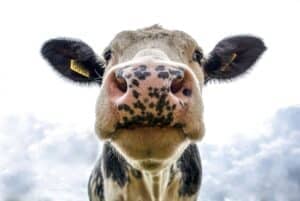
- Any cattle testing positive to bTB are slaughtered out of the herd as soon as possible.
- Isolation areas are cleaned thoroughly and disinfected after removal of the positive cattle.
- Any vehicles, equipment or facilities (eg trailers, collecting yards, crushes) that you share with other farmers are thoroughly cleaned after use and before you use them for your farm or livestock.
- Fences and hedges are secure so that cattle cannot break into your herd or break out of your herd to mix with neighbouring cattle.
- Cattle cannot make nose to nose contact with neighbouring cattle over fences or hedges.
- If fencing or hedging isn’t good enough to prevent nose to nose contact, consider coordinating grazing with neighbouring farms so that cattle in different herds are not in adjacent fields.
To limit the risk of infection from infectious badgers it is important to:
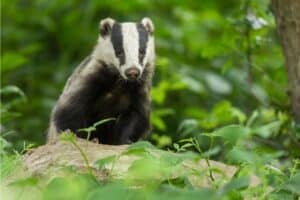
- Ensure badgers cannot get access to areas where cattle are housed and especially that they cannot access feed stores or silage clamps (especially maize silage).
- Ensure cattle cannot get access to badger setts and latrines.
Practical measures to help limit risk
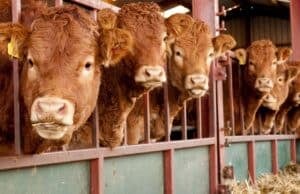
– Ensure that sides of buildings are solid and smooth and at least 1.5 metres high.
– Ensure that gaps at the sides and bottoms of doors are less than 7.5 cm.
– Keep meal in secure bins or silos.
– Avoid meal spills – if this happens clean it up to avoid attracting badgers into yards.
– Consider using electric fencing to exclude badgers from farmyard areas. A combination of four strands of fencing at 10cm, 15cm, 20cm and 30cm has been shown to effectively exclude badgers. [Note fencing should not exclude badger access to setts].
– Identify badger setts and latrines, and where possible fence these off a minimum of 4m away from badger activity eg using normal electric fencing at 80 cm, so that cattle cannot get access to them.
– Only set out meal for cattle that will be consumed that day ie avoid meal being left overnight which could attract badgers.
– Raise feed troughs and mineral licks off the ground to make them less accessible to badgers.
– Use mains water for cattle if possible and raise drinkers to limit badger access.